Change management – the stages that determine whether a transformation makes sense
Over the years I have watched many transformations, some impressive, others stopping in mid-step. One thing, however, always recurred: the decision to change itself was the easiest part of the whole process.
Change in business and production is talked about a lot. Some implement new tools, others reorganize teams, others update strategy. The problem is that the decision to change itself means little. What really makes a difference is how it is carried out day by day, decision by decision.
This article is not an attempt to create another method. Rather, it is a sorting out of experiences and observations from working with leaders who have had to lead their organizations through moments of uncertainty.
Change starts earlier than you might think
Rarely does the need for transformation arise suddenly. It usually builds up slowly in the form of overburdened managers, protracted decisions or a sense that production is working harder than it should. Sometimes it shows up in results. More often it comes out in the way people stop asking questions.
In conversations with leaders, there is often a moment of hesitation: it’ s clear that something needs to change, but it’s not quite clear what exactly. This state of tension is sometimes difficult, but it is the natural beginning of the process.
A mature approach to change begins with accepting that not everything can be planned in advance. First you need to understand what kind of system you are dealing with.
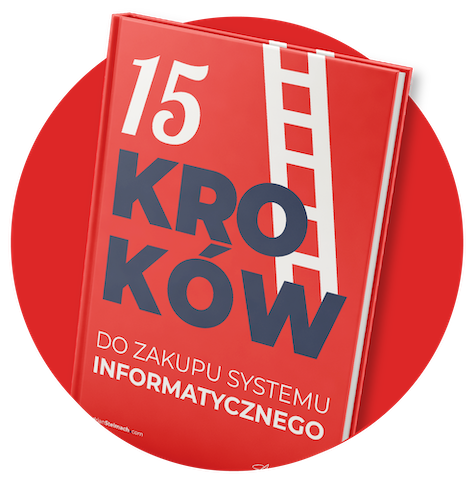
Get 5 chapters of the book for free!
Join the newsletter and gain access to 40% of the book
“15 Steps to Buying an Information System“.
Stages of change management in an organization – a practical approach
In theory, there are many models of transformation. In practice, organizations go through similar phases, even if they call them differently. It’s not about the ideal sequence, but about the logic of the operation.
1. diagnosis, or stopping for a moment before acting
The first step is not planning, but taking a close look at how the organization really works.
At this stage, it’s worth asking yourself some simple but uncomfortable questions:
- Where do delays most often occur?
- Who actually makes the decisions?
- What behaviors are rewarded, even if no one talks about them explicitly?
At first glance, this sounds simple. In practice, it requires leaders to do something more difficult than acting – to stop.
Often slogans like “we need more agility” sound good, but explain little. Only careful observation shows what actually needs to change.
2 Direction, or when the strategy must become operationally understandable
Simply creating a transformation plan is rarely enough. Teams don’t work on slides, but in actual daily realities.
That is why it is so important to translate strategy into the language of practice:
- What exactly will change in the way we work?
- What decisions will be made differently?
- What ceases to be a priority?
The best leaders, often don’t focus on convincing people of a vision. Instead, they show how that vision affects specific actions.
3. preparing the organization, or the moment of truth for leaders
Every change tests the consistency of leadership. If leaders talk about autonomy while controlling every detail, teams quickly lose trust.
Preparing an organization is more than workshops or presentations. It’s a series of small decisions that show that the new approach really applies.
This means, among other things:
- changing the way meetings are conducted,
- a different approach to errors,
- greater transparency in communication.
It is at this stage that many transformations begin to take shape or stop before they have time to develop.
4. implementation, which is the phase where chaos occurs (and that’s okay)
When change takes effect, things rarely go according to plan. There are ambiguities, a drop in energy, sometimes even frustration.
This is a natural transition moment. Organizations learn new habits, and old patterns stop working.
In my experience, the most important thing then is to focus on small successes. Visible results, even small ones, help teams regain a sense of purpose.
The biggest risk is not the resistance of the people, but the loss of consistency by the leaders.
5. fixation, that is, when change ceases to be the subject of meetings
The final stage is not spectacular. It has no big announcements or groundbreaking decisions.
Change only begins to be sustainable when:
- appears in evaluation and bonus systems,
- affects the way recruitment is done,
- is becoming part of the organization’s everyday language.
This is where the real change management process ends. Not at the point of implementation, but when the new approach is no longer “new.”
Introducing change in the company – an example from a practical scenario
Imagine a medium-sized manufacturing plant where every operational decision goes through several levels of approval. Shift managers are overloaded, machine operators are waiting for decisions, and downtime begins to affect results.
Initially, the company was convinced that the problem lay in employee productivity. Only a more thorough diagnosis showed that the main challenge was the way decisions were made and the lack of clear lines of responsibility between production, maintenance and planning.
The change process was as follows:
- Operational diagnosis – analysis of decision flow on the shop floor, interviews with foremen and shift leaders. It turned out that many escalations were due to unclear procedures, not human error.
- New direction – introducing more autonomy for line leaders and simplifying approval paths for minor technical decisions.
- Preparation of teams – short meetings at the beginning of the changes, during which leaders explained what specifically was changing in the daily work of operators.
- Piloting on one production line – testing the new rules for several weeks, observing the impact on downtime and maintenance response time.
- Gradual scaling – extending changes to more areas of the plant with adjustments based on the teams’ experience.
The first weeks were not easy, as some managers feared losing control, and operators needed time to get used to greater responsibility. Over time, however, the number of escalations decreased, decisions began to be made closer to the workplace, and communication between departments became more direct.
This scenario demonstrates well that successfully implementing change in a production environment is not about imposing new procedures, but about gradually building trust and role clarity, especially where work rhythm and operational security matter.
Illusions that most often hinder change
In working with leaders, the same beliefs regularly return:
- That employee resistance is something that needs to be “broken through” rather than understood,
- That communication is about conveying information,
- That implementation means the end of the transformation.
The paradox is that the experience of leaders, while extremely valuable, can also be a hard barrier. What worked before will not always work in a new context.
Change management as a leadership competency
Change in an organization is not a project to be ticked off. It is a process that requires attentiveness, consistency and a willingness to learn.
- Diagnosis is more important than quick fixes,
- The strategy must make operational sense,
- Implementation is all about working with people,
- The consolidation of the change determines its real impact.
FAQ – the most common questions about change management in an organization
What is the change management process really about?
The change management process is not a single initiative, but a sequence of activities including diagnosis, preparation of the organization, implementation and consolidation of new ways of working. In practice, this means working both at the level of strategy and the daily behavior of leaders and teams.
How many stages does change management have?
There is no one-size-fits-all model, but most transformations go through similar phases: understanding the need for change, determining the direction, preparing people, implementing, and consolidating the new standards. More important than the number of phases is their logic and consistency in action.
Why do employees often resist change?
Resistance rarely stems from a reluctance to develop. More often it is a reaction to a lack of clarity or a sense of security. When people don’t understand the meaning of a change or don’t know how it will affect their daily work, caution naturally follows. The role of leaders is to give the change context and meaning.
What does it look like to implement change in a manufacturing company?
In a manufacturing environment, the change should be grounded in operational realities, i.e. shift rhythms, job security and line leaders’ responsibilities. Most often, it starts with a pilot in one area and is only later scaled to the entire plant. The involvement of foremen and shift leaders is key, as they set the pace for the change.
How long does it take for a successful organizational transformation?
It depends on the scale of the change and the maturity of the organization, but most transformations take longer than leaders initially anticipate. While the first effects may take a few months to appear, it often takes a year or more to fully solidify new habits.
What is the leader’s role in change management?
A leader is not just a communicator of strategy. During a transition, he or she becomes a reference point for the team, as his or her decisions, work style and the way he or she responds to mistakes show whether the change is really important. The consistency of a leader’s actions often has a greater impact than formal procedures.