Technology consulting as an investment in company growth
I won’t discover America if I say that modern IT solutions can dramatically change the way a company operates: they streamline processes, increase operational efficiency, strengthen data security and enable you to stay ahead of the competition. I believe that their multitude can also overwhelm. It may sound brutal, but I’ll say this: it’s still half a misery. Worse, when an investment in new technologies turns out to be a throwaway of money. There is a remedy for this: technology consulting. In this article, we’ll look at what it is and why you should use it.
Technology consulting – what is it?
Professional technology consulting is specialized support in the use of technology to achieve business goals. Although it sounds simple, the results can surprise. By working with experts, companies can not only improve their operations, but also gain a real competitive advantage.
Often companies invest in new solutions before they have defined the actual problem. Individual departments race to come up with ideas for improvements and juggle needs. This leads to confusion. Technology consulting exists precisely for this purpose:
- bring order to the decision-making chaos,
- Name the targets before the tools are in place,
- to see if the problem actually lies where everyone thinks it does.
In short, counseling is not:
- technology audit “for the sake of the audit itself.”
- slide presentation,
- supplier selection.
- a conversation about processes, not systems,
- Mapping reality, not spreading visions,
- translating business into the language of technology, and vice versa.
I often compare technology consulting to visiting a doctor. It doesn’t start with a prescription. It starts with an interview. And the industry – despite appearances – very rarely has this interview conducted honestly.
Three stages of technology consulting
Specialized technology consulting in industry doesn’t start with choosing an IT system. It starts with understanding what stage of digitization of manufacturing an organization is really at and what decisions it needs to make to make digital transformation make business sense.
That’s why, at explitia, we base our technology consulting process on three stages that organize activities and avoid mistakes typical of IT projects implemented too hastily.
Step 1: Analyze your organization’s digital readiness
The first step is a starting point diagnosis. This is a relatively short but fundamental stage of technology consulting, based on site visits and discussions with the IT, maintenance and management teams.
At this stage, we are interested not in the declaration, but in the reality:
- What the technical infrastructure looks like,
- To what extent the processes are already digitized,
- Where the data is produced and whether it can be integrated,
- What limitations arise from the current way of working.
It can be compared to a technical inspection of a car – we know what works flawlessly and what needs repair or replacement. A technology audit is the foundation of wise investment decisions, because it allows you to realistically assess a company’s readiness to implement IT systems and plan digital transformation at a pace that matches the organization’s capabilities. Without this step, further technology decisions would be mere hypotheses.
Stage 2 Assessment and documentation for IT projects
The second stage is the in-depth Assessment, or technology consulting proper. This is work spread over several weeks, requiring close cooperation with the client’s team and multiple visits to the plant.
The goal of this stage is to create documentation that becomes a solid foundation for planning and implementing IT projects in production. Two key documents are created here:
The requirements workbook (AS-IS), which describes the current state of the enterprise in selected areas: functioning systems, machinery, available data sources, technical and operational documentation. The scope of the analysis is always tailored to the transformation goals. The requirements notebook eliminates guesswork and allows technology suppliers to prepare comparable, reliable bids.
Digitization Roadmap – a roadmap for digital transformation, broken down into stages with clearly defined scope, timeline and milestones. The roadmap allows you to implement changes step by step, without having to launch all systems at once, while maintaining a consistent IT architecture.
Phase 3 Consulting and technology implementation support
The third stage is the role of an external technology consultant, who accompanies the organization from the project implementation stage. The fruit of specialized technology consulting is no longer a document, but a newly developed practice.
At this stage, organizational culture is taken to the wallpaper, including:
- communication,
- change management,
- Matching technology with real processes and people.
Consulting is about making sure that the IT systems being deployed support the way teams work, rather than working alongside them. This is the stage where the fate of digital transformation is most often weighed.
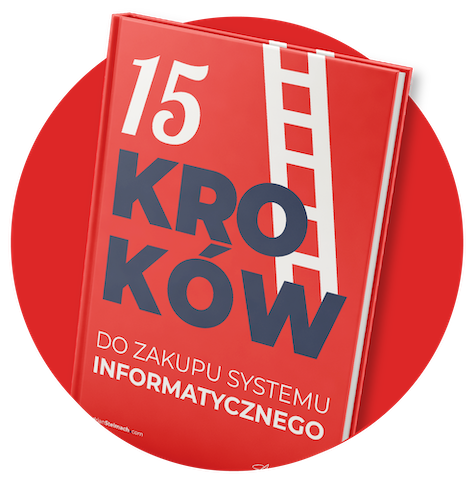
Get 5 chapters of the book for free!
Join the newsletter and gain access to 40% of the book
“15 Steps to Buying an Information System“.
Benefits of technology consulting
Technology consulting understood in this way does not promise quick marketing results. However, there are many advantages of technology consulting. First of all, it gives: control over the digitization of production.
- Consistency of activities from analysis to implementation,
- Technology decisions based on facts, not conjecture,
- Better alignment of IT systems with production processes,
- Lower risk of misguided investments,
- greater predictability of IT projects,
- Clear rules for cooperation with technology suppliers.
Technology consulting combines expertise from IT, automation and manufacturing, but does not reduce digital transformation to technology alone. The point of reference is always processes, people and business decisions to be made faster and more informed.
It is worth looking at professional technology consulting not as an operating cost, but as an investment in the security of IT projects and the stability of the entire digital transformation.
If you feel like technology is starting to overtake process understanding in your organization, that’s often the best time to stop and see if the direction you’re taking is really leading to where you want to get to.
When it’s a good idea to use consulting services
Are you planning a digital transformation? Implementing a new IT system? Or maybe you want to optimize your operational processes? This is the perfect time to reach out for technology consulting. In such situations, experts conduct, among other things, a techno-economic analysis, which allows you to assess the sense of your investment from both technological and financial perspectives.
Importantly, this is a data-driven approach, not a gut feeling. This means:
- lower investment risk,
- Better tailoring of solutions to the company’s needs,
- greater return on investment.
For example, a company planning to implement an ERP system can, through analysis, avoid costly mistakes and better match the solution to its real needs.
In summary, technology consulting is not just technical assistance. It acts as a compass to help companies find their way in a digitally-challenged world and move forward on a sure and set path.
By now you probably understand why I don’t ask, “What system do you want to implement?” From my perspective, it is better to askwhat decision you would like to make in the future faster than today.
If you can’t find an answer to the latter question, you can let go of technology, but technology consulting can’t.