Preparing for EMS Implementation: 7 Steps Before Energy Starts Eating Into Your Margin
You can have modern machines, a good team, and a full production schedule, and still lose money on energy. That’s why preparing for EMS implementation can be a logical next step.
A well-prepared Energy Management System (EMS) does more than show energy consumption. It helps you find cost faster, assign it to the right area, and make a decision before the same problem shows up again next month.
Most of the time, the issue is not that someone forgot to check something. More often, the company simply does not have the data needed to see where the cost is created. There can be many reasons, for example:
A production line runs longer than it should.
A compressor uses energy after working hours.
A downtime event lasts only several minutes, but auxiliary equipment keeps consuming utilities.
One shift produces with lower energy cost than another, but nobody sees it in daily reports.
An EMS system can show you that. But before it starts helping, you need to know what to measure, why you are measuring it, and who is responsible for reacting. That is why preparing for EMS implementation should be treated as the first stage of energy management.
Step 1. Define why your manufacturing plant needs an EMS system
Do not start with meters, dashboards, or integrations. Start by asking yourself and your team: what do we want to see better with EMS?
It may be energy cost per product, machine operation after hours, power peaks, compressed air, or data for ESG, ISO 50001, or an energy audit.
What is an EMS system for?
An EMS system helps energy stop being a general plant cost and become a cost assigned to a place, time, product, and decision.
According to the IEA, companies that implement energy management achieve, on average, around 11% energy savings in the first years. That is not a guarantee for every manufacturing plant, but it is a strong reason to base decisions on data.
Step 2. Choose the area where energy has the biggest effect on cost
You do not have to start energy management across the whole plant. It is often better to begin with one area where energy has a strong impact on operating costs.
A good starting point may be:
a production line with high energy consumption,
a compressor room,
a cold storage area,
a paint shop,
a furnace,
an area with frequent downtime,
a department running multiple shifts.
Example: A compressor consumes 25 kW outside production hours from Friday evening to Monday morning. At a price of PLN 0.75 per kWh, that is about PLN 1,050 in one weekend and over PLN 54,000 per year.
A well-prepared EMS shows that consumption to the right person, at the right moment, with cost context.
Step 3. Check what data you already have
Very often, the data already exists, but it is scattered across meters, the production system, invoices, spreadsheets, and team knowledge.
Before EMS implementation, organize it.
Area
What to check
Why
Meters
What they measure and whether remote reading is available
To understand your starting point
Utilities
Electricity, gas, water, cooling, compressed air
Because cost is not only electricity
Production
Production orders, quantities, shifts, downtime
To calculate cost per product
Costs
Tariffs, contracted power, fees
To convert kWh into money
Systems
PLC, SCADA, MES, ERP, API
To know what can be connected to EMS
EMS is not about collecting as much data as possible. It is about using data that helps you make better operating decisions.
Step 4. Connect energy with production
The number of kWh alone is not enough. Two production lines may use a similar amount of energy but have a very different energy cost per product.
That is why EMS implementation should lead to indicators such as:
kWh per 1,000 units,
kWh per kilogram of product,
energy cost per production order,
energy consumed during downtime,
power demand by shift,
utility cost assigned to a line or department.
Example: Line A uses 310 kWh per 1,000 units, while Line B uses 430 kWh per 1,000 units.
Only when energy data is connected with production data can you see where to look for the cause: changeovers, micro-downtime, start-up, machine settings, or differences between shifts.
Get 5 chapters of the book for free!
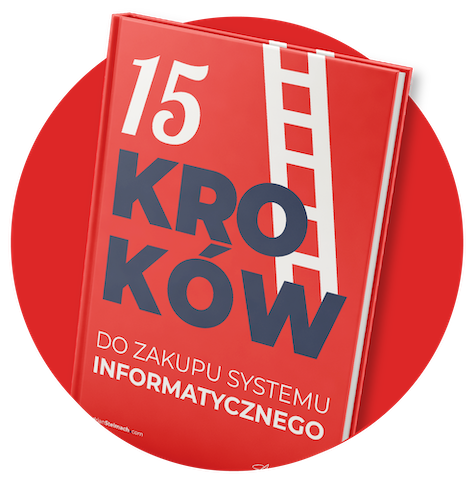
Join the newsletter and gain access to 40% of the book ”15 Steps to Buying an Information System”
A goal such as “reduce energy costs” is too general and can create unrealistic expectations. Better goals sound like this:
reduce energy consumption per 1,000 units by 8% within 9 months,
reduce compressed air consumption outside production hours by 20% within 3 months,
keep power demand below the agreed threshold for 95% of production days,
reduce energy cost during downtime on a selected line by 15%.
Goal
Indicator
Who should see it
Lower product cost
kWh/unit, energy cost per production order
Production, controlling
Less energy during downtime
kWh outside line operating time
Production, maintenance
Power peak control
Maximum power demand
Energy manager, management board
Better compressor room operation
Consumption after hours
Maintenance
If an indicator makes sense, someone should review it regularly.
Step 6. Assign responsibility
The system will show a deviation. An alert will reach the team. But what happens next?
If responsibility is not defined earlier, everyone will see the problem, but no one will feel responsible for solving it.
Role
Responsibility
Management board or plant manager
Defines what business effect EMS should deliver
Energy manager
Analyzes consumption, tariffs, and deviations
Maintenance
Reacts to failures and equipment running after hours
Production
Connects energy consumption with shifts, production orders, and downtime
Finance / controlling
Converts consumption into product or department cost
You need to know who reacts when EMS shows a problem.
Without that answer, the system may collect good data, but the company will not use its full value.
Step 7. Start with a pilot
A pilot should cover a well-chosen part of the plant and show whether the data helps people make better decisions.
It may include:
one production line,
power demand during peak hours,
energy cost per production order,
energy used during downtime.
After the pilot, check whether the data is reliable, whether alerts reach the right people, and whether EMS helps the team find the source of cost faster.
The pilot does not need to be large. It needs to clearly show how the system supports everyday work.
Where does a well-implemented EMS system really help?
An EMS system helps you monitor, analyze, and optimize the consumption of electricity and other utilities in real time. It can work as a standalone system or as a module within a wider environment, such as the Production Portal. It connects energy data with production data.
With that connection, you can check:
how much energy a specific production order cost,
which production line has the highest cost per unit,
when machines consumed energy despite no production,
how downtime affected utility costs,
where power peaks occurred.
Instead of saying, “We used too much energy,” you can say:
This line had a higher energy cost per 1,000 units because changeovers took longer and auxiliary equipment kept running during downtime.
With that information, you can take specific action.
Checklist before EMS implementation
Check whether you can mark these points as done:
You know why you want to implement EMS.
You have selected a starting area.
You know the largest sources of energy and utility costs.
You know which meters are already working.
You have access to production data.
You can connect energy with a product, production order, or line.
You have selected 3 to 5 indicators.
Every indicator has an owner.
The team knows what to do when EMS shows a deviation.
If some points are still unchecked, it is a good moment to organize the basics before the start.
Before you implement EMS, prepare your company to make decisions
EMS will not lower bills on its own. The team will do that when people see the right data, understand the cost, and know how to react.
Preparing for EMS implementation helps you start with the right questions:
where are we losing energy,
how much does it cost us,
who is responsible for it,
what do we want to improve,
how will we check whether it worked.
If you want to go through these 7 steps using data from your own manufacturing plant, let’s talk about EMS implementation in your facility. We will help you choose the starting area, indicators, and data workflow so energy becomes a cost you can manage day by day.
FAQ: Preparing for EMS Implementation
Why does a manufacturing company need an EMS system?
An EMS system helps you see where the company uses energy, when the highest costs appear, and which areas require action. It also makes it easier to calculate energy cost by product, production line, or production order.
Does EMS implementation have to start across the whole plant?
No. It is often better to start with one area, such as a production line, compressor room, or cold storage area.
What data is needed for EMS?
At the start, you need data on energy and utility consumption, production, downtime, production orders, shifts, and energy costs.
How is EMS different from regular energy monitoring?
Energy monitoring shows consumption. EMS helps manage energy by connecting consumption data with production, goals, costs, and team responsibility.
Preparing for MES implementation can be easier with guidance. Let's talk and plan it together.
To provide the best experiences, we use technologies like cookies to store and/or access device information. Consenting to these technologies will allow us to process data such as browsing behavior or unique IDs on this site. Not consenting or withdrawing consent, may adversely affect certain features and functions.
Functional
Always active
The technical storage or access is strictly necessary for the legitimate purpose of enabling the use of a specific service explicitly requested by the subscriber or user, or for the sole purpose of carrying out the transmission of a communication over an electronic communications network.
Preferencje
Przechowywanie lub dostęp techniczny jest niezbędny do uzasadnionego celu przechowywania preferencji, o które nie prosi subskrybent lub użytkownik.
Statistics
The technical storage or access that is used exclusively for statistical purposes.Przechowywanie techniczne lub dostęp, który jest używany wyłącznie do anonimowych celów statystycznych. Bez wezwania do sądu, dobrowolnego podporządkowania się dostawcy usług internetowych lub dodatkowych zapisów od strony trzeciej, informacje przechowywane lub pobierane wyłącznie w tym celu zwykle nie mogą być wykorzystywane do identyfikacji użytkownika.
Marketing
Przechowywanie lub dostęp techniczny jest wymagany do tworzenia profili użytkowników w celu wysyłania reklam lub śledzenia użytkownika na stronie internetowej lub na kilku stronach internetowych w podobnych celach marketingowych.